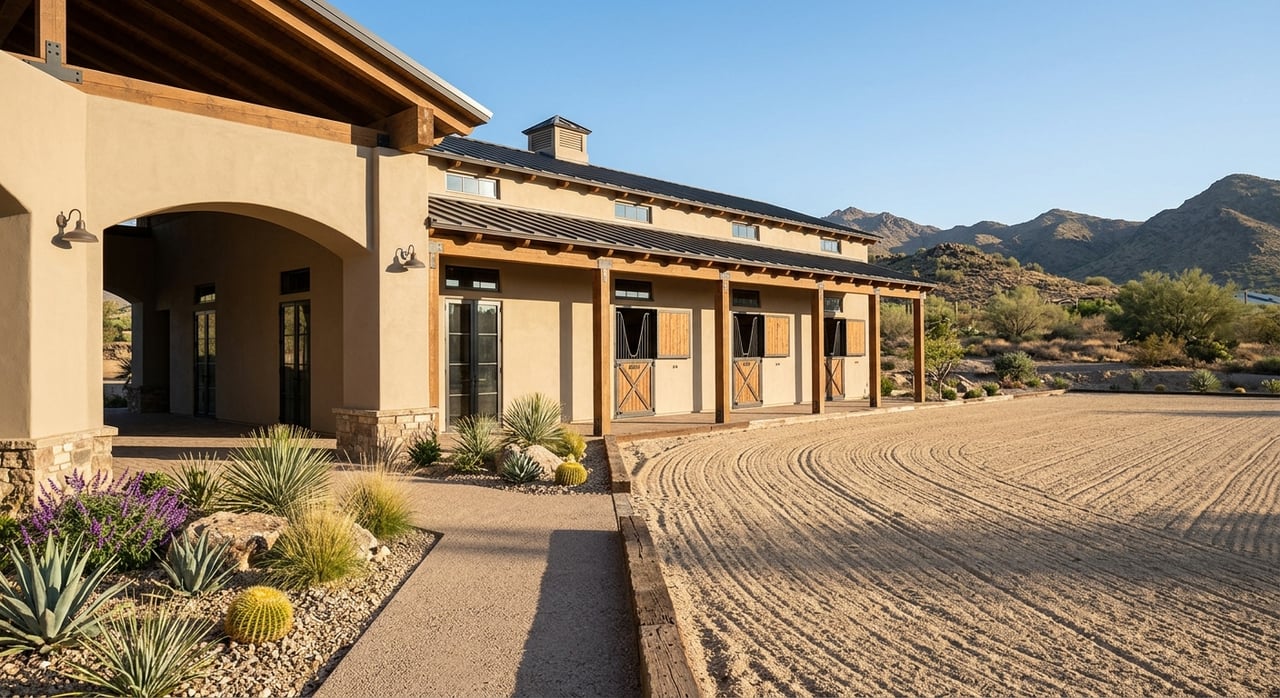
Dreaming about keeping horses at home in Scottsdale? It can be an exciting lifestyle move, but it is also one that comes with more research than a typical home search. If you want a property that truly works for both you and your horses, it helps to understand Scottsdale’s trail access, property rules, and due-diligence steps before you buy. Let’s dive in.
Why Scottsdale Appeals to Horse Owners
Scottsdale offers a unique mix of desert scenery, residential horse properties, and trail access that makes it stand out in the Phoenix metro. The city notes that personal-use horses on single-family and two-family residential properties are generally allowed, as long as there is a city-approved, habitable single-family home on the property.
That said, Scottsdale is not one-size-fits-all when it comes to equestrian living. The rules, feel, and usability of a property can vary a lot by area, parcel, overlays, and HOA restrictions. This is why your search needs to go beyond the listing description.
One of the biggest lifestyle benefits is Scottsdale’s trail system. The city says it has 160 miles of trails with another 150 miles planned, and the McDowell Sonoran Preserve includes interconnected non-motorized trails for hiking, biking, and horses.
Several trailheads also include horse-trailer parking, hitching rails, water, and shade ramadas. That kind of infrastructure is a strong reminder that in Scottsdale’s desert environment, access, shade, and hydration matter just as much as scenery.
Where Equestrian Living Feels Most Established
Not every part of Scottsdale offers the same equestrian character. According to the city’s Cactus Corridor plan, the area east of 96th Street retained a Rural Character district and was expected to reflect low density and, where feasible, an equestrian flair.
West of 96th Street, the character shifted more toward suburban development. That does not automatically rule out horse properties, but it does mean buyers should pay close attention to the specific parcel and surrounding context.
Scottsdale’s Desert Foothills planning guidance also addresses private equestrian and livestock residences, ranches, stables, and larger equestrian facilities. In practical terms, that means some parts of Scottsdale have a clearer framework for horse property use, layout, and long-term compatibility.
What a Scottsdale Horse Property Needs
A horse property needs more than land and a nice view. In Scottsdale, you should look for features that support daily care, safety, and long-term maintenance in a hot desert climate.
At a basic level, many buyers look for:
- Secure fencing
- Turnout or paddock space
- A barn or shelter
- Tack and feed storage
- Trailer parking
- Water access
- Shade
- A practical area for manure and bedding management
These features are not just conveniences. They can affect how usable the property is from day one and how much additional work or cost you may be taking on after closing.
Shade and water matter more here
Scottsdale’s preserve guidance warns that extreme heat is expected, and several horse-friendly trailheads include water and shade amenities. That makes shade structures, water access, and heat-aware planning especially important on private horse property.
If a parcel looks beautiful but offers little shade and a weak water setup, that can become a daily challenge fast. In Scottsdale, comfort and safety for horses need to be part of your buying criteria.
Layout matters as much as acreage
A large lot does not always mean a functional horse property. Scottsdale’s Desert Foothills guidelines say equestrian facilities should be placed in the rear yard, screened from public view with native vegetation, and buffered from neighboring homes where possible.
That means usable layout matters just as much as square footage. You want to know where the barn, turnout, trailer access, and service areas can realistically go, not just how big the parcel looks on paper.
Corrals and setbacks can change your plans
Maricopa County says corrals for unattended horses in residential zoning districts are a permitted use when they are set back 40 feet from property lines and provide at least 1,200 square feet per horse area. For buyers, this is a good example of why lot dimensions can matter as much as lot size.
A parcel may look large enough for your needs, but setbacks and shape can limit where horse areas can actually be placed. This is one of the most common reasons horse-property due diligence needs to be parcel-specific.
Safety Features to Watch For
Horse property value is not just about appearance. Safety, drainage, and maintenance can have a direct effect on how practical the property is to own.
Rutgers recommends footing that is well-drained and free of ruts and stones, secure gates, fenced ponds or ditches, and clear emergency access. Their guidance also emphasizes even arena footing that is free of holes and uneven areas.
When you tour a property, pay close attention to:
- Fence condition and gate security
- Barn flooring and stall condition
- Drainage around paddocks and structures
- Arena or riding area footing
- Lighting and access points
- Water trough placement and condition
- Debris in turnout areas
- Potential hazards in wash or ditch areas
These details can be easy to miss during a standard showing. They can also become expensive or time-consuming issues if you discover them after closing.
Zoning and Permits Come First
If you are new to equestrian property, here is the most important rule: never assume the listing tells the full story. In Scottsdale, parcel-level research should come before big decisions.
The city says it does not issue zoning verification letters. Instead, buyers are directed to use the Property Information Request for parcel zoning, case history, and permit history, along with the City Clerk’s archived adopted zoning ordinance.
Scottsdale also offers a setback request tool that helps identify development standards, easements, and the buildable envelope. The city specifically tells buyers to check title and HOA restrictions as part of that process.
Personal use versus broader equestrian use
Scottsdale draws a clear line between personal horse use and more commercial activity. The city says commercial animal raising is not allowed except on a farm, ranch, or commercial stable, and farms, commercial stables, and ranches in single-family or two-family districts require a conditional use permit.
That matters if your plans go beyond keeping your own horses. Maricopa County also says that public riding and boarding stables may be special uses, while uses such as boarding six or more horses, riding lessons, and trail-ride staging are not treated as simple accessory uses.
Even small improvements may need approval
Scottsdale says building permits are required for fences, accessory buildings, and corrals. Some detached structures under 200 square feet may only need site-plan review, but buyers should verify that on the specific property.
The city also makes clear that CC&Rs are the owner’s responsibility, not the city’s. So even if a use appears allowed by city rules, HOA or deed restrictions may still affect what you can do.
Why Usable Land Matters More Than Lot Size
In parts of Scottsdale, overlays and environmental conditions can reduce how much of a parcel is truly usable. This is especially important in the Foothills and ESL areas.
The city says the Foothills Overlay is intended to preserve rural desert character. It also says the ESL overlay requires that a percentage of each property be preserved as natural area open space while protecting washes, ridges, and other sensitive features.
For horse-property buyers, that means raw acreage is only part of the story. You also need to understand the buildable footprint, the open-space limitations, and where horse improvements can realistically be placed.
Check floodplain and wash conditions early
Scottsdale says development may not increase flooding hazards, and some 100-year floodplain areas within ESL must remain in a natural state unless a wash modification permit is obtained. The city also says watercourses generally may not be altered without engineering certification.
If a wash crosses the property, that can affect barn placement, turnout design, drainage planning, and long-term upkeep. It is much better to understand those limits early than to discover them after you are under contract.
Budgeting for Horse Property Ownership
Buying the property is only the start. Horse properties usually come with ongoing maintenance costs that differ from a standard suburban home.
Maricopa County’s environmental health code requires manure and droppings to be removed at least twice weekly. It also requires watering troughs or tanks to drain so water does not pond, and says unconsumed feed should be removed daily.
Those requirements help explain why regular upkeep needs to be part of your budget from the beginning. Common recurring costs may include:
- Manure removal or composting
- Bedding
- Footing maintenance or replacement
- Fence and gate repairs
- Drainage corrections
- Shade improvements
- Pest control
- Water system upkeep
This is one reason equestrian buyers often take more time during due diligence. Scottsdale asks buyers to verify zoning, easements, HOA rules, permits, floodplain status, and allowable uses on a property-by-property basis, so the research phase can be more involved than a typical home purchase.
A Smart Beginner Approach
If you are just starting your Scottsdale equestrian search, try to think in layers. First, confirm the lifestyle fit and location. Then, confirm the parcel’s legal and physical fit for the way you want to use it.
A helpful beginner checklist includes:
- Identify the Scottsdale areas that match your equestrian goals.
- Confirm the parcel’s zoning, case history, permits, and setbacks.
- Check HOA rules, title limits, and CC&Rs.
- Review usable land, washes, floodplain factors, and open-space constraints.
- Inspect fencing, drainage, footing, shade, water access, and barn areas.
- Build a realistic ownership budget for ongoing care and maintenance.
This kind of step-by-step approach can save you time, reduce surprises, and help you focus on properties that truly fit your lifestyle.
Scottsdale can be an amazing place to enjoy equestrian living, but the best experience usually starts with careful planning. If you want guidance that combines local market knowledge with practical horse-property insight, Openshaw Real Estate Group can help you navigate the search with clarity and confidence.
FAQs
What makes Scottsdale appealing for equestrian living?
- Scottsdale offers residential horse-property opportunities, a strong trail network, and access to the McDowell Sonoran Preserve, where horse-friendly trailheads include trailer parking, water, and shade amenities.
What should buyers check before purchasing a horse property in Scottsdale?
- Buyers should research parcel zoning, permit history, setbacks, easements, HOA or CC&R restrictions, floodplain conditions, and the property’s usable layout for barns, corrals, turnout, and trailer access.
What horse-property features are most important in Scottsdale’s desert climate?
- Shade, water access, secure fencing, turnout space, shelter, drainage, and safe footing are especially important because Scottsdale’s environment includes extreme heat and desert-specific maintenance concerns.
Can you keep personal-use horses on residential property in Scottsdale?
- Scottsdale says personal-use horses on single-family and two-family residential properties are generally allowed when there is a city-approved, habitable single-family home on the property, but county health rules and HOA or CC&R restrictions may also apply.
Do Scottsdale horse properties require permits for corrals or accessory structures?
- Scottsdale says building permits are required for fences, accessory buildings, and corrals, while some detached structures under 200 square feet may only need site-plan review, depending on the project.
Why does horse-property due diligence in Scottsdale take longer?
- Scottsdale horse-property purchases often require extra review of zoning, usable land, floodplain or wash conditions, permits, easements, and private restrictions, so the research process is usually more detailed than a standard home purchase.