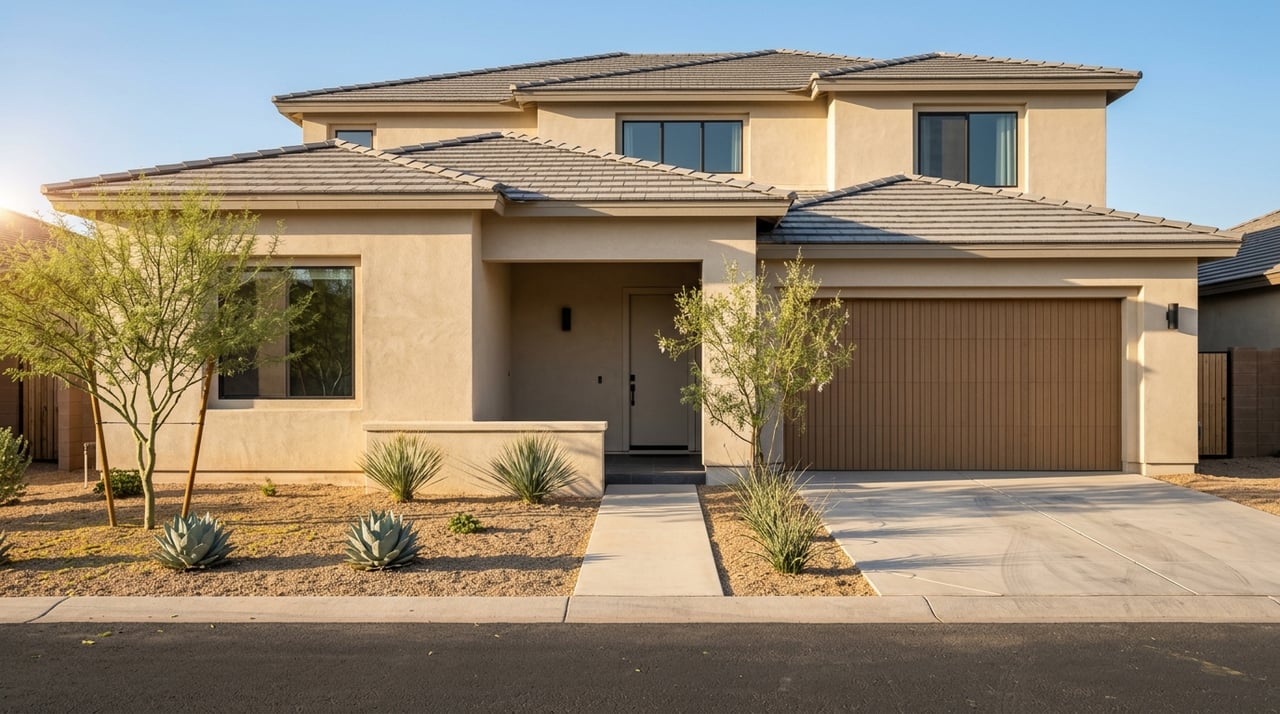
If you already own a home in Gilbert, your next move may feel both exciting and complicated. You might have solid equity, a clear reason for needing more space, and a long list of questions about timing, monthly payment, and how to avoid getting stuck between two closings. The good news is that with a clear plan, a move-up purchase can be much more manageable. Let’s dive in.
Start With Your Equity Picture
Before you look at larger homes, it helps to understand what you may be able to bring to the next purchase. Home equity is the difference between your home’s current value and what you still owe on your mortgage. That number gives you a starting point, but it is not the same as your usable cash at closing.
To estimate what may actually be available, subtract your mortgage payoff and your selling costs from your expected sale price. You will also want to leave room for your next down payment, closing costs, moving expenses, and any updates or purchases you expect after move-in. This step matters because a move-up purchase often feels affordable on paper before all the real costs are included.
In Gilbert, that planning is especially useful because the market is active but not instant. As of April 2026, the single-family median sales price was $585,000, homes averaged 57 days on market, and inventory stood at 3.8 months with 907 active listings. That means your current home may sell well, but you should not assume immediate access to your equity.
Understand Gilbert’s Current Advantage
If you are moving up within the East Valley, Gilbert may offer an important benefit right now: more choice. Compared with nearby Chandler and Queen Creek, Gilbert had the deepest single-family inventory in April 2026. For buyers who want more square footage, a pool, a different floor plan, or a lifestyle shift, more inventory can create more room to compare options carefully.
That does not automatically make Gilbert the right fit for every move-up buyer. Chandler posted a lower median single-family sales price at $550,000 and 3.1 months of inventory, while Queen Creek posted a higher median at $665,900 and 4.5 months of inventory. If you are deciding between these areas, the conversation is often about balancing budget, home style, lot size, commute patterns, and the type of neighborhood setting you want.
Gilbert itself offers a broad range of housing, from condos and apartments to large-lot and executive homes, including some equine-oriented properties. The town’s official resident information also reports a 2024 population estimate of 289,260 and a median household income of $121,543. For move-up buyers, that range of housing options can be helpful if you want to stay local while changing the way you live.
Set A Comfortable Monthly Payment
One of the biggest move-up mistakes is focusing only on purchase price. A larger home can change your monthly budget in several ways, so it is smart to define a payment range that still feels comfortable before you start making offers.
Your true housing payment may include:
- Principal and interest
- Property taxes
- Homeowner’s insurance
- Mortgage insurance, if your down payment is under 20%
- HOA dues, if applicable
- Utilities
- Ongoing maintenance
Closing costs also deserve attention. Buyers are often told to expect about 2% to 5% of the purchase price in closing costs, separate from the down payment. You may also need cash for moving, repairs, furniture, and home improvements, especially if your next home is significantly larger.
Mortgage rates can also influence what feels realistic. Freddie Mac reported a national average 30-year fixed rate of 6.37% for the week of May 7, 2026. Even small rate changes can affect your monthly payment, so this is a good time to pressure-test your budget rather than stretch to the top of your approval range.
Get Fully Prepped With A Lender
A move-up purchase usually works best when your financing plan is clear early. Lenders are required to make a reasonable good-faith determination that you can repay the mortgage, and that review includes income, assets, employment, credit history, and monthly expenses. In other words, the lender is looking at your full financial picture, not just the hoped-for proceeds from your current home sale.
This is why early lender prep matters. If you know how your current mortgage, future home payment, reserves, and sale timeline work together, you can shop with more confidence and fewer surprises. It also helps you decide whether a traditional contingent move is the best path or whether temporary financing is worth exploring.
Once you are serious about a home, ask for Loan Estimates from multiple lenders. According to the CFPB, comparing offers could save you $600 to $1,200 per year. When you review those estimates, pay close attention to whether the rate is locked and whether the property tax and HOA numbers look realistic for the specific home you want.
Decide Whether To Sell First Or Buy First
For many move-up buyers, this is the biggest question of all. In general, the cleaner path is often to sell your current home first and then buy. CFPB homebuying guidance says that if you want to move, you normally try to sell your current home before buying another one.
That advice is especially relevant in Gilbert’s current market because homes are not necessarily moving overnight. With an average of 57 days on market in April 2026, your timeline should account for listing prep, marketing, showings, contract negotiations, and the closing process. A strong plan helps you avoid feeling rushed on either side of the transaction.
That said, some homeowners want access to equity before their sale closes. In those cases, there may be temporary financing options, depending on your situation. These can include:
- HELOC: a revolving line of credit secured by your home equity
- Home equity loan: a lump-sum second mortgage against your equity
- Bridge loan: short-term financing, often used when you plan to sell your current home within 12 months
Each option comes with tradeoffs, and the right fit depends on your equity position, cash reserves, comfort with risk, and how competitive your sale and purchase timelines look.
Build A Realistic Move-Up Timeline
A move-up plan works best when you treat the sale and purchase as one coordinated project. The sale of your current home affects your equity, your down payment, and your timing on the next property. That makes preparation and sequencing extremely important.
A practical move-up timeline often looks like this:
- Review your equity and current mortgage payoff
- Set your target monthly payment and cash comfort zone
- Meet with a lender to review approval and financing options
- Prepare your current home for market
- List your home with a pricing and marketing strategy
- Begin touring move-up options with your timeline in mind
- Negotiate contract terms that support your transition
- Review Loan Estimates carefully once you choose a property
- Compare your Closing Disclosure to your Loan Estimate before closing
- Complete your final walk-through and confirm verified wiring instructions
This kind of structure can reduce stress because you are making fewer decisions at the last minute. It also gives you more room to respond if your current home takes longer to sell than expected.
Compare Gilbert, Chandler, And Queen Creek Carefully
If your goal is simply “more house,” it is easy to focus only on square footage. But move-up buyers are usually choosing a lifestyle as much as a floor plan. That is why it helps to compare nearby markets with clear priorities.
Here is a simple way to think about it based on current market data:
| Area | April 2026 Median Price | Inventory | What It May Mean For You |
|---|---|---|---|
| Gilbert | $585,000 | 3.8 months | More single-family choices among the three markets |
| Chandler | $550,000 | 3.1 months | Lower median price, with somewhat tighter inventory |
| Queen Creek | $665,900 | 4.5 months | Higher median price, with the most inventory of the two comparison markets listed here |
Gilbert can be appealing if you want to stay close to familiar routines while expanding your options. Chandler may appeal if price sensitivity is a major factor. Queen Creek may enter the conversation if you want a different setting, larger homes, or more room to explore lifestyle-specific properties.
Know The Cleanest Path To Closing Day
Once you are under contract, details matter. The closing of the loan and the closing of the home purchase typically happen at the same time, so staying organized is key. This is where a coordinated team can make a real difference, especially when you are managing both a sale and a purchase.
Before closing, buyers should receive a Closing Disclosure at least three business days ahead of time. Review it carefully and compare it with your earlier Loan Estimate so you understand any changes. You should also complete a final walk-through before signing.
It is also important to verify any wiring instructions through trusted contacts. Last-minute wire fraud scams can impersonate settlement professionals and create expensive problems. Taking a few extra minutes to confirm instructions can protect your funds.
One last point matters for move-up buyers: you are not fully committed until the closing documents are signed. But walking away late in the process can mean losing your deposit and possibly certain fees, such as appraisal or application costs. That is why contingency planning and document review are so important throughout the transaction.
A move-up purchase in Gilbert can absolutely be done well, but it works best when your numbers, timeline, and expectations all line up. If you want a plan that accounts for your sale, your next purchase, and the details in between, the team at Openshaw Real Estate Group can help you map out a smart next step.
FAQs
How do you estimate equity for a move-up purchase in Gilbert?
- Start with your expected sale price, then subtract your mortgage payoff and expected selling costs. The amount left is a better estimate of what may be available for your next purchase.
Should you sell first or buy first when moving up in Gilbert?
- In many cases, selling first is the cleaner path because it gives you a clearer equity position and reduces pressure. That matters even more in a market where homes averaged 57 days on market in April 2026.
What costs should you include in a move-up home budget in Gilbert?
- Include principal and interest, property taxes, homeowner’s insurance, HOA dues if applicable, utilities, maintenance, and mortgage insurance if your down payment is under 20%. You should also budget for closing costs, moving expenses, and any post-move repairs or updates.
How should you compare Gilbert, Chandler, and Queen Creek for a move-up home?
- Focus on your budget, desired home style, lot size, inventory levels, and daily lifestyle needs. Current data shows Gilbert offers strong inventory, Chandler has a lower median price, and Queen Creek has a higher median price with more inventory than Chandler.
What should you review before closing on a move-up home purchase?
- Review your Closing Disclosure at least three business days before closing, compare it with your Loan Estimate, complete a final walk-through, and verify wiring instructions through trusted contacts.