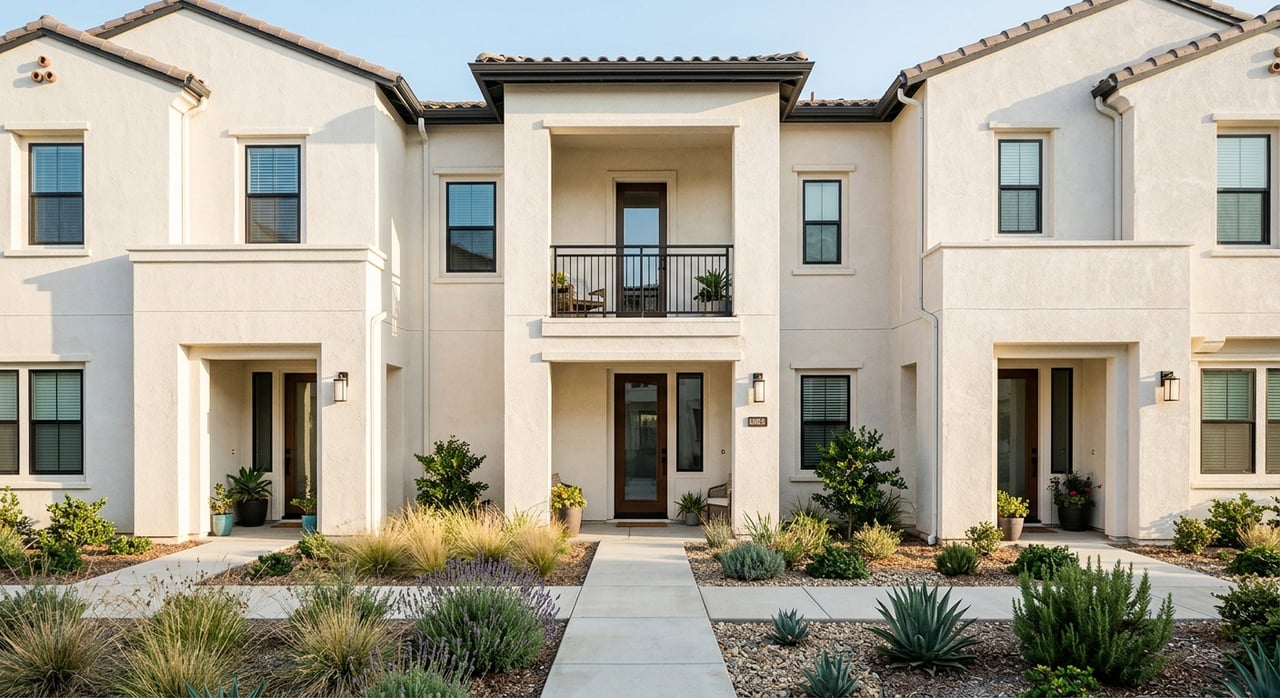
Attached-home living in Phoenix can look simple at first glance, but the details matter more than the exterior. A place that looks like a townhome may not be a townhome in the legal sense, and a condo’s monthly fee may cover more than you expect. If you want a home that fits your budget, lifestyle, and long-term plans, it helps to understand how ownership, maintenance, financing, and neighborhood setting all work together. Let’s dive in.
Why Phoenix attached homes need a closer look
In Phoenix, the choice between a condo and a townhome is not just about building style. Arizona law makes important distinctions based on ownership structure, common areas, and association rules.
That means two homes with a similar look can come with very different responsibilities. Before you decide what fits best, it helps to understand what you are actually buying.
Condo vs. townhome in Arizona
Condos are defined by shared ownership
In Arizona, a condominium is a form of real estate where individual units are separately owned, while the rest of the property is owned in common. Owners also hold an undivided interest in the common elements, which Arizona law defines as everything outside the units.
In practical terms, that usually means you own your interior unit space and share ownership of areas like the roof, exterior walls, hallways, grounds, or recreation spaces. The exact boundaries depend on the recorded documents for that community.
Townhomes can fall under different legal structures
A townhouse-style property is not always its own legal category in the way buyers assume. Arizona subdivision law includes townhouse and similar projects where an owner has an undivided interest in the land paired with exclusive occupancy of a unit.
Some townhome-style homes are part of a planned community, while others may be structured differently. The key point is simple: the exterior style alone does not tell you how ownership, maintenance, or assessments work.
Planned communities have their own framework
Arizona law describes planned communities as developments owned and operated by an owners association with mandatory membership and assessments. One major distinction from a condominium is who owns the common areas or common elements.
For you as a buyer, that difference affects responsibility, monthly cost, and the rules you agree to follow. That is why reviewing the declaration, CC&Rs, plat, and title documents matters before you make assumptions.
What this means for your monthly cost
A lower purchase price does not always mean a lower total payment. With condos and many townhome communities, your monthly carrying cost includes more than your mortgage, taxes, and insurance.
HOA fees need to be part of the conversation from day one. If you treat them like an afterthought, you can end up stretching your budget more than planned.
What HOA fees may cover
Condo fees commonly cover items such as:
- Exterior and common-area repairs
- Water
- Sewer
- Trash service
- Recreation area upkeep
- Insurance for shared areas
- Reserve funding for future repairs
What is included varies by community. Fees can also vary based on location, age, condition, property value, and amenities.
Special assessments and reserve health matter
A monthly fee is only part of the picture. You also want to know whether the association has healthy reserves and whether special assessments are a possibility.
If reserves are underfunded, owners may face added costs when major repairs come up. That can affect your true ownership cost and your comfort level with the purchase.
Maintenance is different from detached-home living
One reason many buyers consider condos or townhomes is convenience. Attached-home communities often reduce the amount of exterior upkeep you handle yourself.
That said, reduced maintenance does not mean zero responsibility. You still need to know where the association’s responsibilities stop and yours begin.
Condo maintenance often splits inside and outside
For condos, the association may handle common areas and some types of exterior damage, while the owner is responsible for interior insurance needs and upkeep inside the unit. That can be a welcome tradeoff if you want less exterior maintenance.
Still, every community is different. The governing documents should spell out the maintenance split in a way that helps you plan for both routine care and unexpected repairs.
Townhome-style living may offer a middle ground
Townhomes often appeal to buyers who want a private exterior door and a layout that feels more like a single-family home. Freddie Mac notes that townhomes are side-by-side units and can be an affordable option for first-time buyers, often with less outside maintenance than a detached home.
Many communities also include shared amenities like parks or playgrounds. The tradeoff is that rules, fees, and maintenance obligations still need a close review.
Phoenix lifestyle fit matters as much as home type
Attached-home living in Phoenix is not one-size-fits-all. The right fit often comes down to whether you want a more urban routine, a more low-rise neighborhood feel, or a more suburban setting.
That is where Phoenix gives buyers real variety. Different parts of the city support very different day-to-day lifestyles.
Central Phoenix offers a more urban pace
Central City and downtown Phoenix represent the city’s most urban attached-housing setting. The city describes Central City Village as the urban center for Phoenix, with strong ties to government, employment, transportation, and cultural activity.
If you want denser development patterns and easier access to light rail-oriented areas, this part of Phoenix may feel like a better match. Condo living is often a more natural fit in these settings.
Roosevelt Row, Grand Avenue, Melrose, Midtown, and Uptown feel walkable
Phoenix describes Roosevelt Row and Grand Avenue as walkable arts districts, and Melrose as a midcentury district with local boutiques. Visit Phoenix also highlights Midtown and Uptown as areas with active eat-drink-shop gathering spots.
For buyers drawn to a more connected, out-and-about lifestyle, these areas can make attached-home living especially appealing. The neighborhood setting may matter just as much as the square footage.
Arcadia offers a lower-rise feel
Visit Phoenix describes Arcadia as a neighborhood with historic charm, leafy streets, and a laid-back but polished feel. Buyers who want attached living without a highly urban environment may find this style of setting more comfortable.
It can be a good example of how condo or townhome living does not always mean high-rise or dense city blocks. In Phoenix, the vibe can vary a lot from one area to the next.
Ahwatukee Foothills shows the suburban contrast
The city describes Ahwatukee Foothills as outdoor-focused, low-rise, and dominated by master-planned single-family neighborhoods with easy access to I-10. Even if you ultimately buy in a condo or townhome community elsewhere, this area helps illustrate the contrast between urban walkability and a quieter suburban routine.
That comparison can be useful when you are deciding what kind of daily life you really want. Sometimes the lifestyle question is the one that clarifies the home search fastest.
What to review before you buy
Arizona gives buyers access to important disclosure documents in condo and planned community resales. These documents are not just paperwork. They tell you what you are committing to.
A careful review now can help you avoid surprises later.
Key documents to read
Arizona resale disclosure law requires documents and information that may include:
- Bylaws
- Declaration
- Assessment balances
- Insurance coverage information
- Reserve information
- Current operating budget
- Most recent annual financial report
- Most recent reserve study, if any
- Summary of pending litigation
Arizona law also states that the declaration, bylaws, and rules are part of your contract with the community. It also notes that unpaid association assessments can lead to foreclosure.
Questions worth asking early
As you compare Phoenix condos and townhomes, ask questions like:
- Is this legally a condominium or part of a planned community?
- What do the monthly fees cover?
- Who handles exterior maintenance?
- How strong are the reserves?
- Are there any special assessments?
- Are there rules about rentals, pets, parking, or exterior changes?
- Is there pending litigation?
- Will the financing type I want work for this property?
These are the kinds of details that shape affordability, flexibility, and resale potential. They also help you compare two similar-looking properties in a more realistic way.
Financing can be property-specific
Financing a condo is not always as straightforward as financing a detached home. Project approval and community financials can affect your loan options.
HUD says FHA condo loans require either an FHA-approved project or single-unit approval, and the review may consider insurance coverage, financial condition, title, legal action, and physical condition. Fannie Mae also advises buyers to ask whether a condo is warrantable and to review reserve funds and special assessments.
If you are buying new construction, the Arizona Department of Real Estate says the Public Report must be provided before you sign the purchase contract. ADRE says that report covers utilities, common-community facilities, local services, taxes and assessments, and HOA details, and it advises buyers to review CC&Rs for restrictions on items such as landscaping, RV parking, play equipment, and satellite antennas.
How to decide what fits you best
The best Phoenix attached home for you depends on your priorities. If you want convenience, shared amenities, and a more urban setting, a condo may be the better fit.
If you want a layout that feels more like a house, a private exterior entrance, and potentially a little more separation from neighbors, a townhome-style property may feel more comfortable. But in Phoenix, the legal structure and HOA setup still need to be confirmed before you rely on the label.
A smart decision comes from looking at five things together: ownership structure, monthly cost, maintenance split, financing eligibility, and neighborhood lifestyle. When you review all five, you get a much clearer picture of what will work for your budget and your day-to-day life.
If you are comparing condos or townhomes in Phoenix and want help sorting through the details, the team at Openshaw Real Estate Group can help you evaluate the numbers, documents, and lifestyle fit with confidence.
FAQs
What is the difference between a condo and a townhome in Phoenix?
- In Phoenix, the difference is not just the exterior style. A condo is defined by separate unit ownership plus shared ownership of common elements, while a townhome-style property may exist within different legal structures, including planned communities.
What do Phoenix condo HOA fees usually cover?
- Phoenix condo HOA fees often cover items like exterior and common-area repairs, water, sewer, trash, recreation upkeep, shared insurance, and reserve funding, but coverage varies by community.
Why should Phoenix buyers review HOA documents before buying?
- HOA documents help you understand fees, maintenance responsibilities, reserve funding, insurance, rules, financial condition, and pending litigation before you commit to the property.
Can financing be harder for a Phoenix condo?
- Yes. Condo financing can depend on project approval and community factors such as insurance, financial condition, legal issues, reserve funds, and whether the project meets lender guidelines.
Are townhomes in Phoenix always cheaper than detached homes?
- Not always, but townhomes are often considered a more affordable entry point than detached homes. Your total monthly cost still depends on price, HOA fees, insurance, taxes, and maintenance responsibilities.
What Phoenix areas fit attached-home living best?
- Buyers often look to more urban or walkable parts of Phoenix such as Central City, downtown, Roosevelt Row, Grand Avenue, Melrose, Midtown, and Uptown, while places like Arcadia offer a lower-rise feel and Ahwatukee Foothills provides a suburban contrast.