By Openshaw Real Estate Group
Some design styles are trends. Modern classic is something different — it's the style that makes a room feel like it's always looked exactly right. You've probably walked into a home and noticed that everything feels polished and composed without being fussy or cold. That's what modern classic achieves when it's done well. For homeowners in Gilbert, Chandler, and the East Valley who want a home that photographs beautifully, holds its appeal through the years, and works for how people actually live today, it's worth understanding what this style is and how to apply it.
Key Takeaways
- Modern classic interior design blends timeless architectural details — crown molding, coffered ceilings, symmetrical layouts — with contemporary furnishings, clean lines, and updated materials
- The color palette anchors in warm neutrals: white, cream, beige, and soft gray, with jewel-toned accents used deliberately
- Symmetry, high-quality materials, and attention to detail are the hallmarks of the style done well
- In 2026, the style is trending softer and warmer, with more emphasis on natural materials and textured fabrics alongside the classic architectural elements
The Core Concept: Bridging Two Worlds
Modern classic style is not traditional design, and it's not minimalist contemporary design. It sits deliberately between the two. Traditional or classical design is ornate, rich, and symmetrical — think elaborate moldings, heavy draperies, antique furniture, and rooms that feel like they belong to a specific historical period. Contemporary or modern design is spare, functional, and restrained — clean lines, open space, and very little decoration for its own sake.
Modern classic takes what's best from both. It keeps the architectural vocabulary of classical design — the moldings, the symmetry, the quality materials — while stripping away the heaviness and updating the furnishings and finishes to feel current.
Modern classic takes what's best from both. It keeps the architectural vocabulary of classical design — the moldings, the symmetry, the quality materials — while stripping away the heaviness and updating the furnishings and finishes to feel current.
What that looks like in practice:
- Coffered ceilings or crown molding in a room with simple, streamlined furniture rather than ornate carved pieces
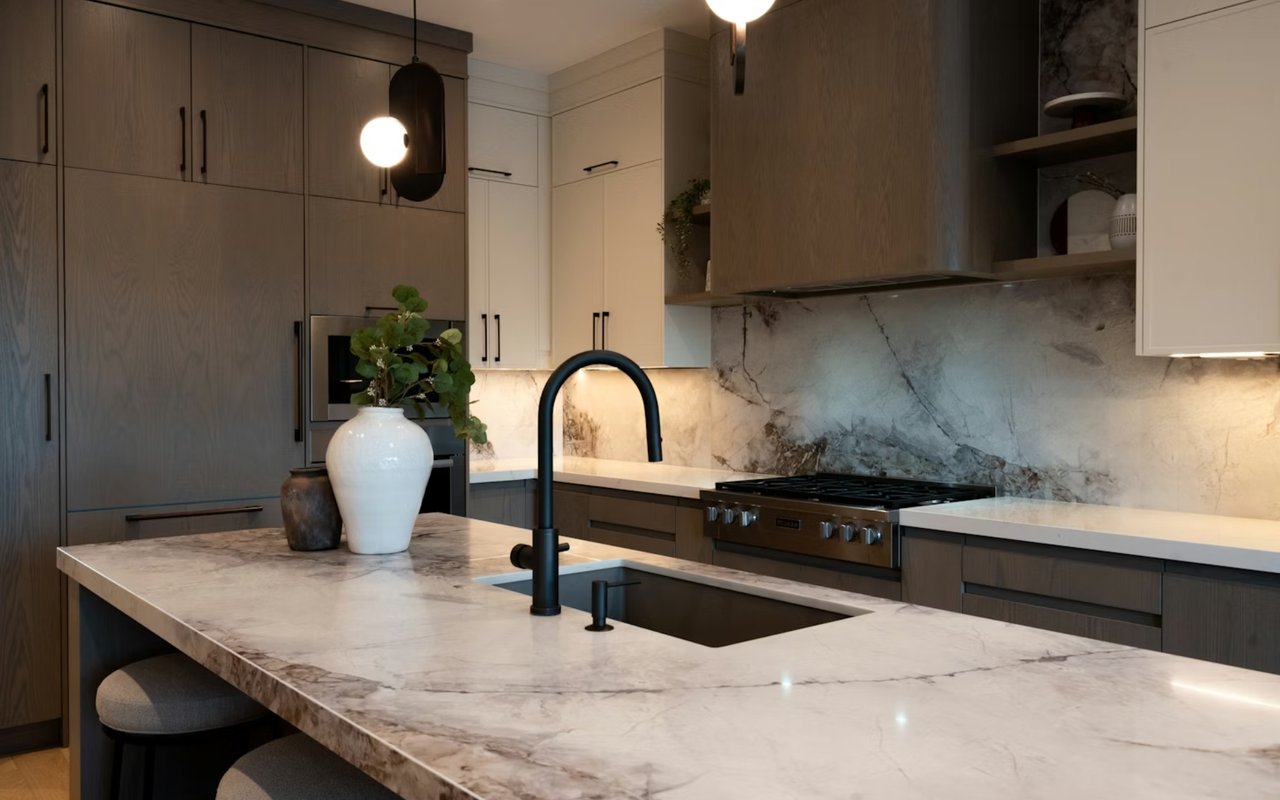
- Marble countertops and brass hardware in a kitchen with clean, shaker-style cabinetry rather than elaborate detail work
- A symmetrical living room arrangement with contemporary upholstered sofas in a neutral linen or velvet, anchored by a classic fireplace surround
- Wainscoting or wall paneling in a dining room paired with a modern statement chandelier rather than a traditional candelabra
- Architectural detail that gives a room character, surrounded by furniture that keeps it from feeling heavy or dated
The result is a room that feels like it has always been there — and always will be.
Color Palette
The modern classic color palette is grounded in warm, quiet neutrals that read as sophisticated rather than safe. This isn't the cool gray that dominated interiors for much of the 2010s — it's warmer, creamier, and more inviting.
The core modern classic palette:
- Whites and creams: Not stark bright white, but warm off-whites and ivory tones that feel clean without being clinical. Benjamin Moore's White Dove and Sherwin-Williams' Alabaster are among the most widely used in this style category
- Beige and warm greige: The foundation color for walls, upholstery, and flooring in most modern classic interiors — versatile, timeless, and easy to layer
- Soft gray and blue-gray: Used as secondary neutrals, particularly in rooms that benefit from a cooler counterpoint to the warm primary tones
- Rich jewel-toned accents: Deep emerald, sapphire blue, ruby red, and deep burgundy appear through accessories, artwork, and upholstery — never as dominant wall colors, but as deliberate focal points that give the room depth
- Brass, black, and polished nickel: Metal finishes function as color in modern classic interiors, with warm brass being particularly prominent in the current interpretation of the style
In 2026, the trend within this style is moving toward deeper, warmer versions of these neutrals — chocolate browns, caramels, and rich taupes replacing the lighter beiges that defined earlier iterations.
Materials and Finishes
The modern classic style is built on quality. The materials it favors are ones that look better over time rather than worse — natural stone, solid wood, fine metals, and genuine fabric rather than synthetic substitutes.
Signature materials in modern classic interiors:
- Marble: Countertops, fireplace surrounds, and occasionally flooring — marble is the material most closely associated with the style's classical roots and continues to define high-end modern classic kitchens and bathrooms
- Solid wood: Warm wood tones in floors, built-ins, and furniture pieces ground the space and prevent the neutral palette from feeling too cold
- Brass and brushed gold hardware: In faucets, cabinet pulls, light fixtures, and door hardware — brass bridges the gap between classic warmth and contemporary finish
- Velvet upholstery: Sofas, accent chairs, and ottomans in velvet bring the textural richness that the style requires while keeping the silhouettes contemporary
- Polished wood and lacquered surfaces: Used selectively for high-contrast pieces that catch the eye against the neutral walls
Furniture and Layout
Modern classic furniture has cleaner lines than traditional furniture but more presence than strictly minimalist contemporary pieces. The shapes are grounded and proportional — furniture that sits well in a room rather than floating in it.
How to approach furniture in modern classic style:
- Sofas with tight, clean upholstery in neutral fabrics, often with a subtle channel tufting or button detail that nods to classic design without being overly formal
- Dining tables in marble or polished wood with contemporary chairs in upholstered fabric — mixing the table's classical material with modern chair silhouettes
- Symmetrical furniture arrangements, particularly in living rooms — pairs of chairs, matching side tables, balanced art placement — give the style its composed quality
- Built-ins and millwork where possible: bookcases, window seats, and cabinetry that's built into the architecture rather than sitting in front of it
- Area rugs in traditional patterns — geometric, Persian-inspired, or solid — scaled to anchor the furniture grouping rather than float under just the coffee table
How This Applies to Homes in Gilbert and the East Valley
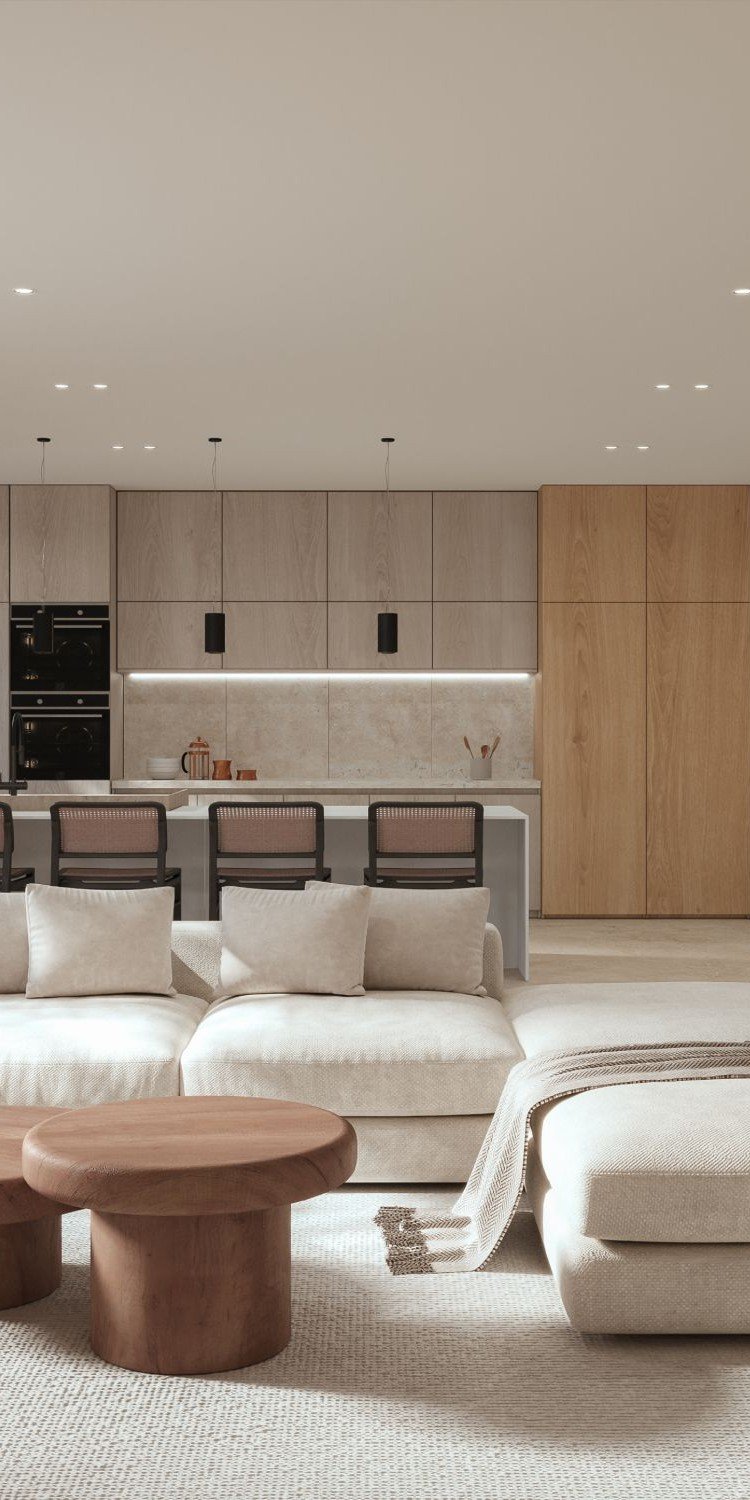
Gilbert and surrounding communities in the East Valley have a high concentration of newer construction with open-concept floor plans — the kind of layouts that respond particularly well to modern classic treatment. An open kitchen and living room with clean architectural detail, a neutral palette, quality finishes, and symmetrical furnishings looks exceptional in the natural Arizona light and photographs strongly for resale.
The style also translates well to Arizona's indoor-outdoor lifestyle. Modern classic interiors extend naturally to covered patios and outdoor living spaces when the color palette, material choices, and furniture quality are maintained consistently through the transition.
The style also translates well to Arizona's indoor-outdoor lifestyle. Modern classic interiors extend naturally to covered patios and outdoor living spaces when the color palette, material choices, and furniture quality are maintained consistently through the transition.
FAQ
Is modern classic the same as transitional design?
They're closely related but not identical. Transitional design emphasizes the blend of traditional and contemporary elements with more flexibility — it's less concerned with symmetry and architectural detail. Modern classic is more deliberate about maintaining classical architectural vocabulary while updating the furnishings. Both styles tend to use neutral palettes and quality materials.
Does modern classic work in newer homes without architectural details?
Yes, but you may need to add some. Crown molding, board and batten wainscoting, and built-in cabinetry can be added to newer construction relatively affordably and make a significant difference in how the style reads. Without any architectural detail, the style starts to drift toward straight contemporary, which has a different character.
How does modern classic affect resale value?
Homes styled in modern classic tend to photograph well, appeal to a wide range of buyers, and avoid the risk of being perceived as dated — all of which support strong resale outcomes. In competitive markets like Gilbert and Chandler, presentation matters, and homes that feel polished and timeless tend to generate stronger interest.
Find Your Home in Gilbert With Openshaw Real Estate Group
We work with buyers and sellers across Gilbert, Queen Creek, Chandler, and the broader East Valley every day, and we see firsthand how design choices influence how quickly homes sell and at what price. At Openshaw Real Estate Group, we help our clients make smart decisions about their homes — from the first showing to the final closing. Reach out to us to learn more about how we work with buyers and sellers across the East Valley and let's start a conversation.